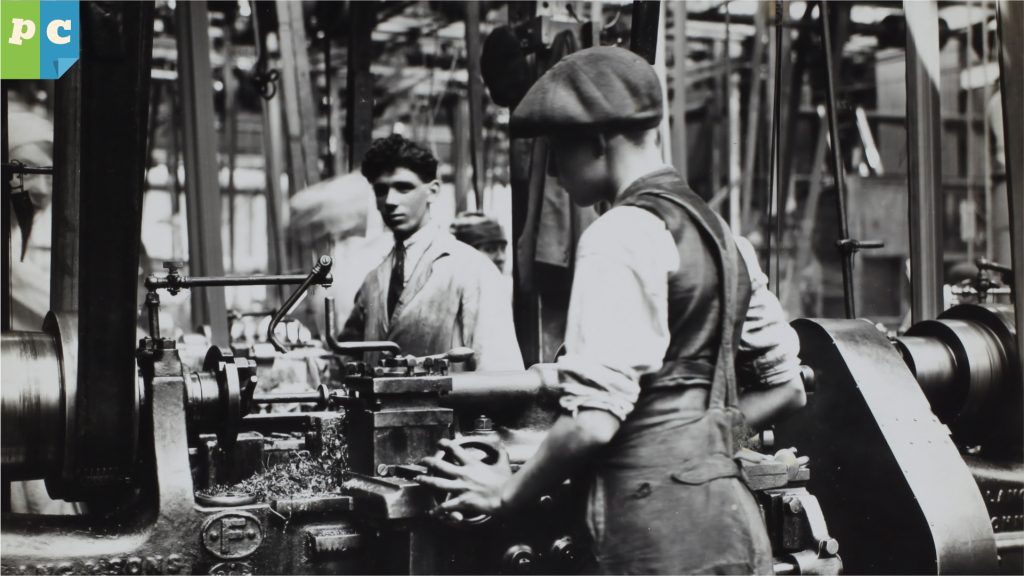
Industrial Revolution
Industrial Revolution: Did it do more good than harm?
Since the start, Pros lead with 59%. Similar over the last 12 months.
- Since the start (Apr 2022)207 votes59% Pros41% Cons
- Last 5 years207 votes59% Pros41% Cons
- Last 12 months207 votes59% Pros41% Cons
- Last 30 days59 votes58% Pros42% Cons
Year by year new votes per year
| Year | New votes, pros and cons | Majority | Votes |
|---|---|---|---|
| 2023 | 59% Pros | 86 | |
| 2022 | 59% Pros | 121 | |
| Total | 58.9% Pros | 207 |
The Industrial Revolution began in Britain in the late 18th century and replaced manual production with machines and factories. It transformed work, cities and everyday life.
This list is also available in German: Industrielle Revolution
- Top post
Rapid technological progress
- Top post
The influx of people into industrial cities spread many diseases
Created many new jobs that didn't exist before, especially in skilled work and research
Uncontrolled and unregulated pollution
Faster mass production lowered the cost of much-needed tools, clothing and household goods, making them more affordable and accessible
It also contributed to inequality of wealth between countries that produce goods and countries that consume them
The emancipation of the peasants
Poor working conditions
Fast production of hand tools and other useful items led to the development of new kinds of tools and vehicles
Despite enormous economic growth, workers were exploited
Labour-saving machines and other inventions
Overcrowding of cities and industrial towns
The Industrial Revolution was the driving force behind various advances in medicine
Global warming
It revolutionised agrarian society, also known as the Agricultural Revolution
Child labour
Improved prosperity and quality of life for the average person
Not enough housing
Rapid scientific progress
Increased production
Life improved in many ways: child labour was abolished, there were more jobs for people with disabilities too, and farmers' work became easier thanks to better technology